

A project intitiated by WIEGO highlighted issues endemic to the garment industry that drive poor working conditions at the lowest end of the value chain.
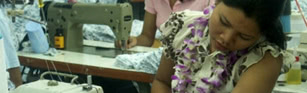
WIEGO conducted the project with a High Street (UK) retailer of fast fashion to analyze the impact of purchasing practices on working conditions in a factory in Turkey. Turkey is an important sourcing country to Europe's fast-fashion industry.
The retailer had a high-profile commitment to ETI, but there was a disconnect between its ethical trading strategy and the supplier sourcing strategy within the company. Buying decisions were made chiefly on the basis of commercial considerations such as price, and there was little awareness of how purchasing decisions could impact working conditions.
The project, begun in 2008 as part of WIEGO's participation in the Ethical Trading Initiative (ETI), examined purchasing practices along the supply chain from the buying and technical functions in the UK through the intermediary agent in Turkey and down to the sub-contracted stitching unit in Istanbul.
Buying teams were individually interviewed in the company’s UK headquarters, as were departments of the joint-venture supplier in Istanbul. A physical inspection was done of the sub-contracted stitching unit (factory), and interviews conducted with the factory owner and a number of workers. An experienced Turkish social auditor subsequently also did a number of off-site, confidential interviews with workers.
Working conditions in the factory were found to be typical of many lower-end factories in the Cut, Make, Trim sector. Over 60 per cent of its 120 workers were unregistered. The national trade union said this was the norm in Turkey. Lead times were typically very short, which can make working hours long. Workers who try to join the trade union are immediately fired and black-listed--along with their relatives.
The following purchasing practices were found to have a direct, negative impact on working conditions:
- The critical path analysis (CPA) is the planning tool used to plot the timing and deadlines of a product from concept to shelf. Often, the CPA uses an idealized time-table drawn up by a production planner whose best estimate on may be influenced by the over-zealous ambitions of a supplier who commits to any lead time and quantity to secure business from the buyer. Delays at the front end impact down the chain. This is one of the chief factors driving excessive overtime hours in the garment industry.
- Poor communication and changes to styling after a design has been signed off and “sealed” is a common practice industry-wide. Buyers change designs, colours and specifications post-sealing. This affects the time allocated to production because, for example, new fabrics and trims need to be sourced. Every day that is shaved off production time leads to increased pressure on the supplier and the workers.
- Forecasting quantities is a critical issue between buyer and supplier that impacts workers. Buyers under-estimate or over-estimate the popularity of a product. Under-estimating means repeat orders and can result in a surge of pressure. It may lead to further sub-contracting to units with even worse working conditions, often without the knowledge or authorization of the buyer. On the other hand, if the buyer over-estimated the popularity of a fashion trend and has too much inventory, they typically cancel orders that are already in production. It is normal practice for buying companies to expect the supplier to take the “hit” so workers may be laid off with no warning.
- Financial penalties are often leveled against suppliers when orders are late, even when the causes of the delay rest chiefly with the buying company. This may include charging air freight to the supplier when an order has to be shipped urgently. This financial pressure often forces a supplier to squeeze workers on wages, on unpaid and forced overtime, and on non-payment of statutory benefits.
- This Turkish supplier had a high degree of dependency on orders from the High Street retailer, putting both the supplier and the workers in a vulnerable situation. The project with the factory ended when the supplier declared bankruptcy in 2009. The High Street retailer assumed responsibility for the payment of outstanding wages and supported workers with the fees to seek legal re-dress. However, the “duty of care” to the ethical management of supplier relationships was lacking.
- Results: Improved Purchasing Practices
WIEGO worked with the High Street retail company to establish a series of work-streams with a team of “ethical champions” from across the buying and technical functions within the business. This involved the ETI Purchasing Practices programme and had the endorsement of the company's senior management.
Purchasing practices identified as impacting negatively on working conditions with the Turkish supplier were assumed to be having a similar effect across all supply chains in the business. The champions were tasked with working on one area of purchasing practices with one of their key suppliers in their buying area (e.g. teens, women, men, accessories, etc.) to verify the impact and come up with solutions to change the way in which business was done. The team members came up with some innovative solutions which proved to be beneficial in alleviating pressure points.
Within the scope of the ETI programme on Purchasing Practices, other NGOs engaged with different brands in various ways to tease out the impact on working conditions. Out of a total of six pilot projects, all came to similar conclusions around similar business practices.
Conclusions
The broad consensus: these issues are endemic to the garment industry’s way of doing business. The industry is characterized by a high degree of competitiveness with a race to the bottom on price at the lower end of the market. This inevitably places pressure down the supply chain and those at the very bottom of the chain are affected worse. Industrial out-workers in India were found to be earning less than a quarter of the minimum wage. It surfaced that invisible and unauthorized sub-contracting led to child labour. Unregistered workers in Turkey make up an estimated 70 per cent of the workforce and they and their families are persecuted if they try and join a trades union.
The evidence is that the fashion and garment industry’s way of working drives poor working conditions and an increasing informalization of labour.
Read the ETI Step by Step Guide to Reviewing and Improving Purchasing Practices, Lessons Learned from the Purchasing Practices Project, May 2010.